From Broadcaster to Streaming Company: How Television Operations Are Changing
Becoming a streaming company does not mean that a broadcaster stops being a broadcaster. It means extending the disciplines that keep linear television dependable into a market where audiences expect channels, live events and programmes on every connected screen.
The change is already visible in audience behaviour. Nielsen reported that streaming represented 44.8% of US television use in May 2025, exceeding broadcast and cable combined for the first time. In the UK, Ofcom's 2025 Media Nations research found that broadcaster content still accounted for 90% of in-home video viewing among people aged 75 and over, but only 29% among 16–24-year-olds (Nielsen's May 2025 Gauge; Ofcom Media Nations 2025).
Broadcast is not disappearing. The audience relationship is fragmenting. A television organisation now needs to operate reliable linear services while also behaving like a digital product, distribution and data business.
From Broadcaster to Streaming Company Is an Operating-Model Change
A traditional broadcast workflow is built around a small number of known destinations. The schedule is assembled, the channel is originated, and the signal leaves through established terrestrial, satellite or cable paths. That model remains excellent at delivering predictable television at scale.
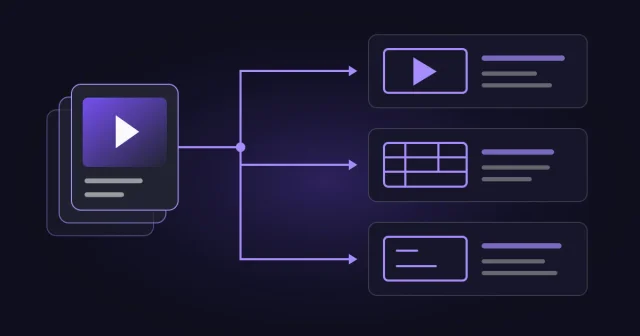
Streaming adds a different set of responsibilities. The same organisation may operate an app, distribute to connected-TV platforms, launch FAST channels, create event pop-ups, publish clips, manage on-demand catalogues and support advertising decisions at programme or audience level. The channel is no longer the final product. It is one expression of a wider content service.
The commercial incentive is material. IAB projects that US digital video advertising will exceed $80 billion in 2026 and represent more than 60% of total TV and video advertising spend (IAB 2026 Digital Video Ad Spend research). Broadcasters do not automatically capture that growth. They need products, inventory, measurement and operating processes designed for digital delivery.
Five Capabilities Define a Streaming Media Business
1. Product ownership beyond the transmission chain
A streaming service needs somebody to own the viewer proposition, not only the output signal. That includes deciding which audiences the service serves, how content is discovered, how frequently it is refreshed, what devices matter and how success is measured. Programming remains central, but it works alongside product management, user experience and lifecycle decisions.
2. Rights and metadata that can travel
A title may be cleared for one country, one device class, one business model or one time window. Those rights must travel with the asset and schedule. Rich metadata must also identify programmes, episodes, participants, genres, captions and advertising opportunities so platforms can present and monetise the content correctly.
3. Elastic distribution and monetisation
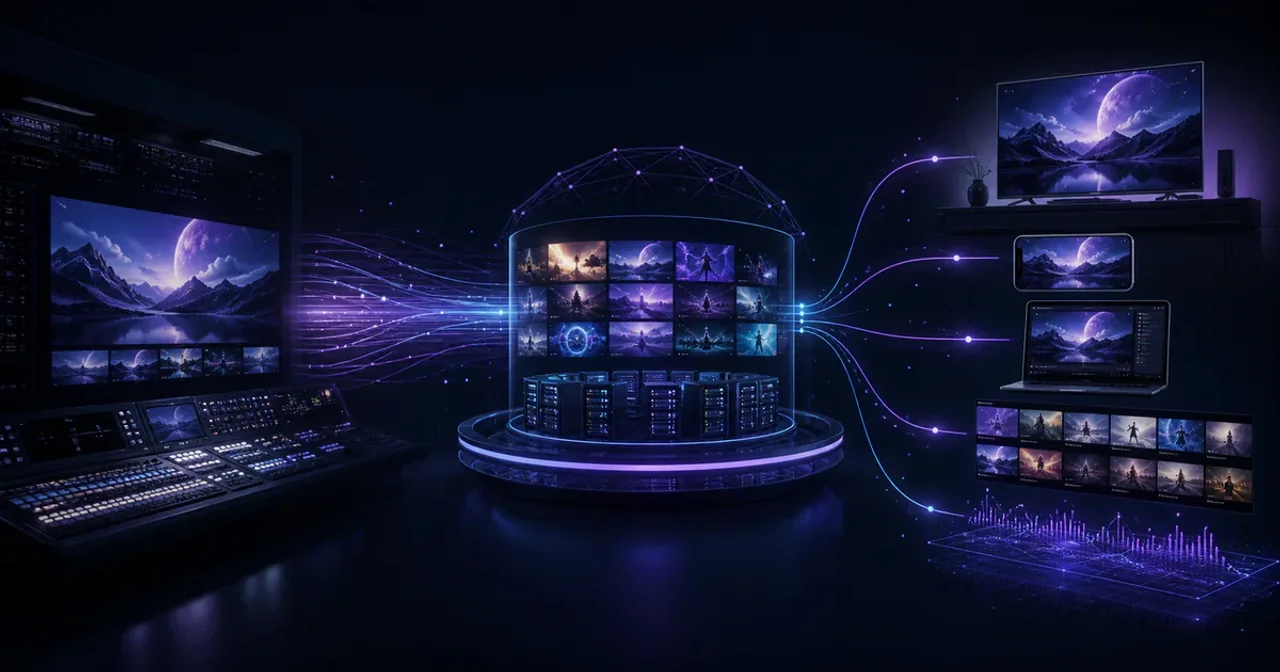
When viewers receive linear television over the internet, part of the chain is elastic by definition. CDN capacity follows demand. Server-side ad insertion responds to each session. Just-in-time packaging prepares HLS or DASH outputs for different devices. Keeping master control in the cloud places channel operations closer to the infrastructure from which the service is packaged, monetised and viewed, reducing unnecessary transfers between a fixed facility and an elastic delivery stack.
This is not an argument for putting every workload in one cloud or abandoning resilient contribution paths. It is an argument for designing playout, packaging, ad signalling and distribution as one observable service rather than as isolated estates.
4. Audience and operational data in the same conversation
Broadcast teams have traditionally measured reach, ratings and technical compliance. Streaming adds session starts, completion, buffering, churn, content discovery, ad fill and device performance. A useful operating model connects those measures. If viewers leave during a repeated programme block, an ad transition or a specific device failure, the team should be able to distinguish a programming issue from a technical one.
5. Reliability that extends to the player
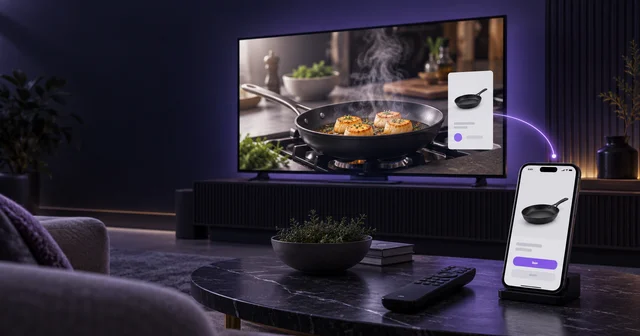
The broadcast signal can be healthy while the viewer sees a stale manifest, a failed licence request or an empty ad break. Streaming operations therefore need monitoring from media readiness and playout through encoding, packaging, CDN delivery and representative playback. The EBU describes connected televisions as the dominant gateway to video consumption and highlights the resulting competition for prominence and engagement (EBU Media Summit 2025). Reliability now includes being discoverable and playable inside that platform-driven environment.
A Practical Broadcaster-to-Streaming-Company Example
Consider a regional broadcaster with a main news channel, local sports rights and a valuable archive. This is a hypothetical example, but the workflow is realistic.
The organisation keeps its primary linear service. It then uses the same media, schedules and operational control to create a rolling local-news FAST channel, temporary live channels for selected sports events and short-form clips for mobile audiences. Rights rules decide which assets can appear in each territory. Shared metadata powers platform listings and archive search. SCTE-35 signalling creates consistent advertising opportunities, while monitoring checks both channel output and downstream playback.
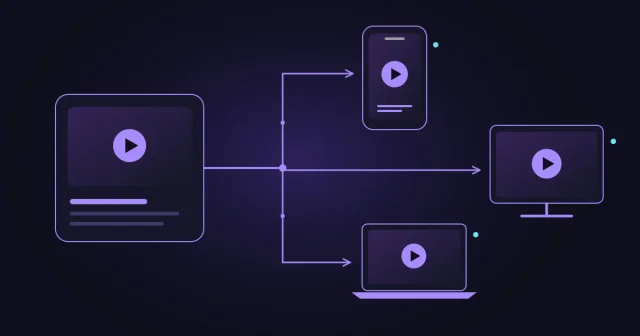
In practice, the same content operation can serve the television channel and a range of internet products, without needing a separate technical organisation for every destination.
How to Start Without Rebuilding Everything
- Choose one audience problem: launch around a clear need, such as local news availability, specialist sport or access to an archive, rather than starting with a technology shopping list.
- Map the reusable operation: identify which media, schedules, graphics, compliance rules and monitoring can serve both broadcast and streaming outputs.
- Make rights and metadata operational: move essential restrictions and descriptive data out of spreadsheets and into the workflow.
- Connect the digital delivery chain: validate manifests, captions, ad markers, playback and platform specifications before launch.
- Measure value and reliability together: track audience behaviour, revenue and service health so each product can improve without weakening the core channel.
The first service should be narrow enough to learn from and important enough to deserve proper operational standards. Once the workflow is repeatable, the organisation can add languages, regions, pop-up services and new business models with less risk.
Conclusion: Keep the Broadcast Discipline, Expand the Business
The move from broadcaster to streaming company is not a rejection of linear television. It is a recognition that channels now live alongside apps, FAST services, on-demand libraries and connected-TV platforms. The organisations best placed to succeed will combine broadcast reliability with digital product ownership, portable rights and metadata, elastic delivery, measurable monetisation and end-to-end observability.
Evrideo Broadcast gives media teams a cloud-native control layer for scheduling, playout, live operations and multi-platform distribution, while Evrideo Managed Services can operate that environment on their behalf. The objective is simple: make every new streaming service an extension of a controlled broadcast operation, not another isolated workflow.