
Broadcasting with a SaaS Business Model: Channel Economics
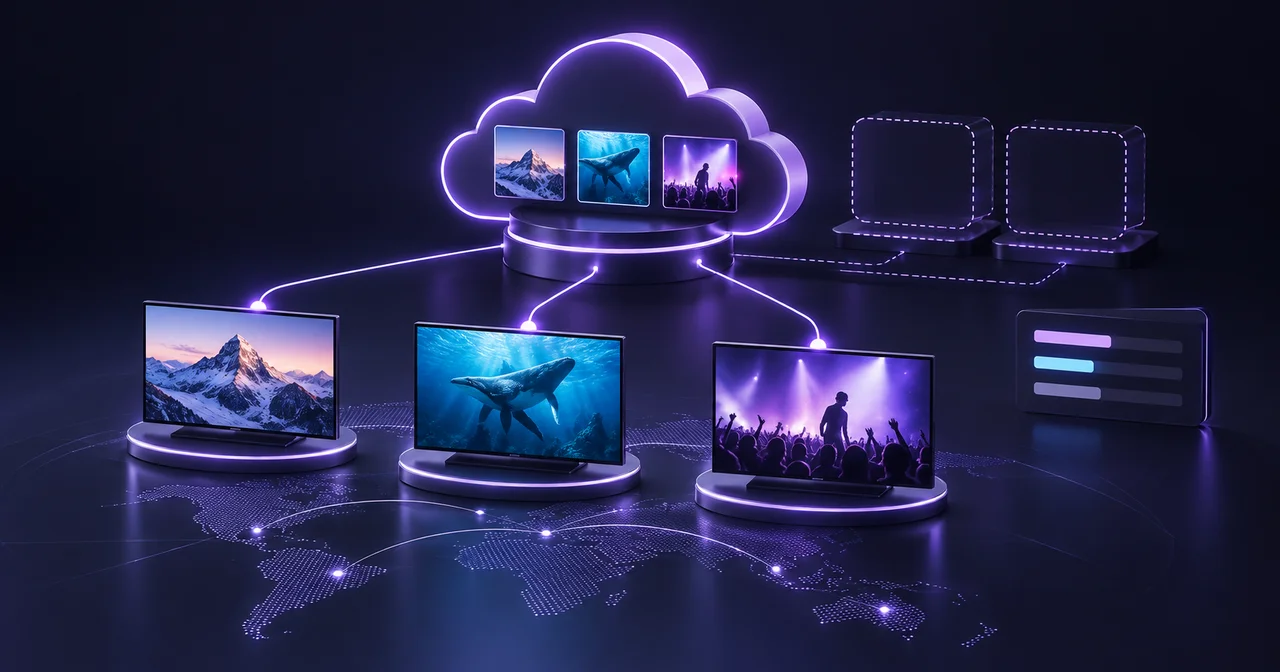
How much should you commit before a new channel has proved that viewers and advertisers want it? Broadcasting with a SaaS business model gives a media business more choices about when it commits technical expenditure and how it expands. The commercial opportunity is to test a proposition, measure its economics and invest further when the results justify it.
Here, SaaS describes how the operator buys its platform. The channel can still earn revenue through advertising, sponsorship, distribution agreements or viewer subscriptions. Those revenue models need their own commercial plan.
What Broadcasting with a SaaS Business Model Changes
A SaaS provider operates the underlying application environment, while the broadcaster uses the service to run its channels. The NIST cloud definition identifies rapid elasticity and measured service as cloud characteristics. These describe technical capabilities, rather than guaranteeing a particular price or cancellation policy (NIST SP 800-145).
That distinction matters when comparing proposals. A platform may charge per channel, by usage, through an annual commitment, or through a combination. Setup, integration and minimum fees may apply. Establish exactly which costs can fall when a channel closes and which remain payable.
A controlled pilot could reuse approved content, start with one distribution partner and add destinations after demonstrating demand. Content rights, accessibility, operational cover and partner acceptance still need funding before launch.
Separate channel costs from audience costs
A 24-hour playout service keeps running whether ten people or ten thousand people watch. Delivering individual internet streams introduces costs that can depend on viewer hours, bitrate, geography and commercial terms.
For example, CloudFront's pay-as-you-go pricing distinguishes data transfer and requests, while AWS also offers flat-rate plans. Those are examples of supplier billing models, not Evrideo prices or a universal CDN tariff (AWS CloudFront pricing).
At an average delivered bitrate of 4 Mb/s, one viewer hour carries approximately 1.8 GB of media using decimal units, before protocol overhead. A month with 200,000 viewer hours therefore represents about 360 TB. Adaptive bitrate, caching architecture and the agreed delivery plan determine the actual bill. Audience growth must appear in the cost forecast as well as the revenue forecast.
Give Every Channel a Commercial Scorecard
The FinOps Foundation recommends connecting technology spending to business outcomes and defining consistent unit metrics. For a broadcaster, useful measures include net revenue per viewer hour, variable delivery cost per viewer hour and the total monthly cost of keeping a channel available (FinOps Foundation: Unit Economics).
Use a complete cost map: platform fees, rights, editorial work, operations, monitoring, encoding, packaging, CDN delivery, ad serving and distribution deductions. Separate fixed, variable and one-off items. Allocate shared costs consistently so a new channel does not appear profitable simply because another department pays its bills.
A simple break-even example
Consider a hypothetical channel with USD 6,000 of fixed monthly channel costs, USD 0.10 of net revenue per viewer hour and USD 0.04 of variable cost per viewer hour. These are invented planning assumptions, not a supplier quote, industry benchmark or revenue forecast.
- Contribution per viewer hour: USD 0.10 minus USD 0.04 equals USD 0.06.
- Monthly channel break-even: USD 6,000 divided by USD 0.06 equals 100,000 viewer hours.
- At 80,000 viewer hours: USD 8,000 revenue minus USD 3,200 variable costs and USD 6,000 fixed costs leaves a USD 1,200 loss.
- At 160,000 viewer hours: USD 16,000 revenue minus USD 6,400 variable costs and USD 6,000 fixed costs leaves USD 3,600.
The result is before any corporate overhead, tax or setup expenditure excluded from the example. Net revenue is after distribution and sales deductions, so those deductions must not be counted twice. Recalculate when ad yield, viewing patterns, content costs or supplier commitments change. Growing an audience with negative contribution per viewer hour increases the loss.
Connect Monetisation to Actual Delivery
Server-side ad insertion can personalise advertising within a linear stream, but the commercial model needs to include the cost of delivering those ads. AWS MediaTailor, for example, documents separate charges for ad insertions, additional ad transcoding and delivery. This is a vendor's own service pricing, not independent evidence of broadcaster profitability (AWS MediaTailor pricing).
Premium sponsorship and directly sold spots can coexist with addressable or programmatic inventory, subject to rights and platform arrangements. Forecast their yields separately. An available ad opportunity does not guarantee a sold impression, and a delivered ad does not by itself establish the amount eventually payable.
Reconcile ad delivery, platform statements, agreed deductions and recognised revenue. Keep reach and frequency definitions consistent when comparing broad-audience linear campaigns with impression-based advertising. The MRC's cross-media video standard addresses common measurement requirements across television and digital. Avoid adding ratings and digital impressions as though they were interchangeable measures (MRC Cross-Media Video Standard).
Build Expansion and Exit into the Launch Plan
Agree review dates and decision thresholds before signing. A limited launch should answer whether the channel attracts repeat viewing, delivers reliably and earns enough contribution to support further investment.
- Define the initial scope: audience, rights, destinations, operating hours and service expectations.
- Confirm the complete quote: included usage, additional charges, support, resilience, minimum terms and notice periods.
- Set expansion gates: assess contribution, retention and operational workload before adding another language or partner.
- Prepare an orderly exit: retain access to schedules, metadata, assets and reporting; agree export costs and partner obligations.
Self-operated SaaS and managed operations also require different budgets. A platform subscription leaves operational work with your team unless the contract includes those services. Compare both options against the coverage and expertise your organisation actually needs.
Use Flexibility to Make Better Channel Decisions
Broadcasting with a SaaS business model can support smaller initial commitments and more deliberate expansion when contracts and workflows allow it. The useful commercial discipline is to connect each new channel's revenue, costs and operational demands before committing to the next stage.
Evrideo Broadcast combines scheduling, content management, playout and live operations in a cloud platform. Evrideo Managed Services provides an alternative for teams that want the operation run on their behalf. Use our cloud broadcast TCO calculator to structure an initial comparison, then discuss your channel plan with our team to establish the scope and commercial terms.
Related Articles

Shoppable TV: What Early Adopters Have Learned
September 18, 2026 · 6 min read
The Cheapest OTT Content May Be a Linear TV Channel
August 28, 2026 · 7 min read

From Broadcaster to Streaming Company: How Television Operations Are Changing
August 21, 2026 · 8 min read