
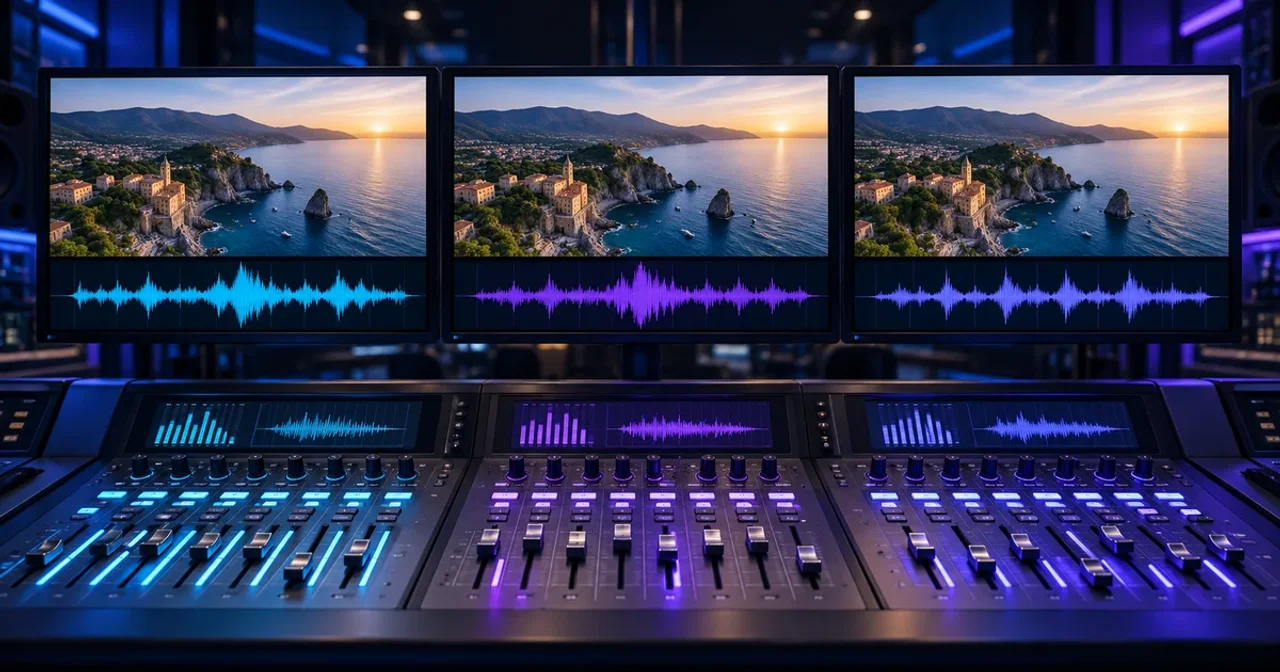
Multilingual channels: an operational checklist
A multilingual channel can have a clean picture, healthy audio meters and the wrong language on air. Running multilingual channels means checking the relationship between the programme, its language versions and the service the viewer receives. A green dashboard needs evidence behind it.
Suppose a documentary channel adds French and Spanish. The commercial team has approved the expansion. Operations now has to keep every episode, promotion, subtitle track and programme listing correct through schedule changes and overnight failover. Here is a practical checklist for that job.
Define what your multilingual channels share
Write down which parts stay identical: pictures, programme timing, advertising breaks, graphics and schedule. Alternative audio works where the versions share a compatible timeline. A territory-specific edit, different commercial break or local promotion may require a separately assembled output.
Confirm the receiving platform’s requirements before choosing the delivery model. HLS supports alternative renditions, including audio and subtitles, with language and selection attributes defined in RFC 8216. A platform’s ingestion pipeline and player still have to preserve and expose them.
Keep language, territory and destination as separate fields. French audio does not establish French territorial rights, and a Spanish-language feed may serve several markets with different schedules and restrictions. Our channel localisation business case covers the commercial decision; the following checks cover daily operation.
Give every version an identity
Bind audio and captions to the approved edit
Use a stable programme identifier plus an explicit edit version. Link each dub, subtitle file, accessibility track and translated description to that version. Record language, duration, frame rate or timebase, timing offset, QC result and approval owner. Filenames alone are a fragile release system.
In our hypothetical channel, edit B removes 20 seconds from a documentary. The French dub still belongs to edit A. Both files can pass independent technical QC, yet dialogue after the cut will be displaced. The readiness check must reject that pairing until the correct version is delivered and reviewed.
The bundle is an operational record. Its files may travel separately, but every release must identify which versions belong together.
Keep accessibility tracks distinct
Dialogue subtitles, captions for deaf and hard-of-hearing viewers, forced subtitles and audio description serve different purposes. Forced subtitles may translate only passages in another language. Captions also communicate relevant sounds and speaker information, as W3C’s caption guidance explains.
Label each track accurately, including regional language variants where needed. Have a competent language reviewer check names, meaning, reading speed and synchronisation. Machine-generated language assets need an approval record and a correction path just like commissioned ones.
Put rights and time into the release record
Store the permitted territories, languages, platforms and start/end dates alongside the content version. Obtain confirmation from the responsible rights team about dubbing and translation permissions. WIPO’s Berne Convention summary identifies translation and broadcasting among protected rights; the actual contract and applicable law determine your permissions.
Use an unambiguous instant for transmission and rights-window boundaries, retaining the intended local timezone for scheduling. The IANA Time Zone Database tracks changes to offsets and daylight-saving rules. A permanent fixed offset can become wrong when clocks change.
Test the repeated hour in autumn and the missing hour in spring. Define how the scheduler handles each, and check the electronic programme guide (EPG) exported to every destination. Local titles, descriptions, episode numbers and programme start times must describe the output that will actually air.
Check the packaged service, then the player
Inspect the delivered manifest for language labels, audio groups, defaults and subtitle references. Apple’s HLS authoring guidance sets requirements for alternative audio and subtitles on Apple devices. Use the receiving platform’s current specification for its particular delivery path, including DASH where applicable.
Then listen and watch on representative devices. Check automatic language selection, manual switching, captions and audio description. Test programme junctions, live inserts and ad breaks. A viewer selecting French should not unexpectedly receive the original soundtrack after an advertisement.
Define permitted fallback behaviour explicitly. If a dub is unavailable, the approved response might be an alternative programme, an original-language version with suitable subtitles, or a holding slate. Rights and accessibility obligations constrain the choice. An operator needs that decision before the missing file becomes urgent.
- 1Approve the bundle
Confirm picture, language assets, QC and rights against the same edit.
- 2Validate the schedule
Check durations, junctions, local times and the destination EPG.
- 3Exercise the output
Play each track through programme changes, advertisements and backup switching.
- 4Record viewer evidence
Save the device, selected language, observed result and responsible reviewer.
This is an illustrative acceptance workflow. Agree the pass criteria and escalation owner with each distribution partner.
Rehearse failures in every language
Fail over to the backup path and confirm that track identifiers, audio assignments, captions and programme timing remain correct. Repeat with an unavailable language asset and a late replacement. A backup that restores pictures while losing the selected language has left an operational fault unresolved.
Combine automated checks with scheduled language-aware viewing. Silence detection cannot prove that dialogue is Spanish. Where speech-language detection assists monitoring, treat its confidence and exceptions as evidence for review, especially during music, short speech or mixed-language programmes.
Track incidents by destination, language and content version. Assign corrections to an owner and verify them downstream. This makes recurring issues, such as stale subtitle files on one partner’s output, easier to isolate.
Keep a release record the next shift can use
For multilingual channels, retain the approved bundle, schedule revision, partner acceptance, test results and fallback instructions together. When an edit changes, identify the affected language assets and repeat the relevant checks. The next shift should be able to see exactly what was approved and what still needs attention.
Evrideo Broadcast supports channel scheduling, playout and live operations. Talk to our team about your language versions and destination requirements, and agree the integrations and acceptance tests before launch.
Related Articles
Repurposing Live Sports for Social Without Buying More Rights
September 2, 2026 · 8 min read
Building a Broadcast-Quality FAST Channel in Under a Day: A Technical Walkthrough
July 1, 2026 · 7 min read
From Broadcast to TikTok in Under 60 Seconds
August 26, 2026 · 8 min read