Building a Broadcast-Quality FAST Channel in Under a Day: A Technical Walkthrough
A broadcast-quality FAST channel no longer has to begin with a six-month infrastructure project. The practical question in 2026 is different: can a media team assemble a credible schedule, validate the media, configure playout, prepare advertising markers, and distribute to FAST, OTT, or broadcast partners in a single working day? With the right preparation, the answer is yes.
The commercial pressure is real. Nielsen's Q1 2026 Ad Supported Gauge found that almost 73% of U.S. TV viewing was ad-supported, with streaming reaching a record 46.6% of that viewing (Nielsen Q1 2026 Ad Supported Gauge). Gracenote also reported that active FAST channel counts had grown 76% since 2023, reaching around 1,850 channels globally in its Q3 2025 Data Hub update (Nielsen Gracenote Data Hub). That growth rewards teams that can launch and iterate quickly without lowering operational discipline.
Building a Broadcast-Quality FAST Channel Starts Before Playout
The fastest launches are not improvised launches. They are prepared launches. Before anyone touches the playout interface, the team needs four inputs: cleared content, a scheduling rule set, channel branding assets, and a distribution target. If those exist, the build becomes a configuration workflow rather than a rescue mission.
Hour 1: Define the Channel Promise
Start by writing the channel promise in one sentence. For example: “classic motorsport highlights for connected-TV viewers, refreshed weekly, monetised through SCTE-35-enabled ad breaks.” That sentence controls every operational decision that follows. It tells the scheduler what cadence to build, the media team what assets matter, the ad operations team where avails belong, and the distribution team which endpoints must be tested first.
At this point, avoid overbuilding. A first-day FAST channel does not need a perfect six-month schedule. It needs a coherent 24-hour loop, enough variation to avoid obvious repetition, and the operational hooks required to change the schedule later.
Hour 2: Prepare the Media Library
A FAST channel is only as reliable as the media behind it. The preparation pass should confirm file availability, duration, aspect ratio, audio layout, captions or subtitles, rights windows, and any content warnings. Missing metadata is not a cosmetic problem; it becomes schedule drift, failed handoffs, or distribution rejection later.
A useful minimum metadata set includes title, episode or event name, duration, rights territory, rights start and end, rating, language, content type, and preferred ad-break structure. Evrideo teams typically treat this as the handoff between editorial planning and playout operations: the same data that helps humans understand the library can also drive schedule rules and downstream signalling.
The One-Day Linear Channel Workflow
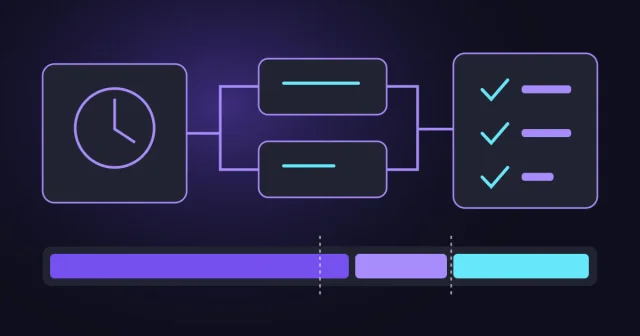
Once the inputs are ready, the working day becomes a sequence of decisions. The order matters because each layer depends on the one before it.
Hours 3-4: Build the 24-Hour Schedule
Create the first 24-hour FAST schedule using blocks, not individual clips one at a time. Blocks might be “morning archive,” “live replay,” “prime-time feature,” “short-form filler,” and “overnight loop.” This keeps the schedule legible and makes replacement easier when rights, timing, or editorial priorities change.
Then check three things: total duration, junction quality, and repetition. Total duration protects the daypart. Junction quality protects the viewer experience. Repetition protects the channel from feeling like a playlist wearing a TV badge. If the channel is launching to FAST platforms, this is also where programme boundaries should support platform metadata and guide presentation.
Hour 5: Add Graphics, Idents, and Compliance Elements
Branding gives the channel shape. Add idents, bugs, lower thirds, slates, rating cards, and emergency fallback assets before distribution testing begins. For regulated or partner-distributed services, compliance assets should be treated as required playout elements, not finishing touches.
This is also the right moment to define fallback behaviour. If an asset fails, does the channel play a slate, skip to the next item, or continue with a pre-approved filler segment? A one-day FAST launch can still be professional if the failure mode is intentional.
Hour 6: Configure Ad Signalling
Advertising is where many quick-launch channels become fragile. The channel needs a clear avail pattern, SCTE-35 or manifest-level cue handling, and a way to validate that ad markers survive packaging and distribution. IAB's 2025 digital video reporting shows how much more advertisers now expect from CTV and live streaming, including biddable inventory, real-time data, and outcome-driven measurement (IAB via TVTechnology). In practice, that means ad operations cannot be bolted on after launch.
For a first-day channel, keep the ad model simple: predictable break positions, validated cue timing, and a monitoring view that confirms marker presence. Dynamic optimisation can come later; broken signalling should not.
Hour 7: Test Playout and Distribution
Before calling the channel ready, run a real playout test. Check video, audio, captions, graphics, clock behaviour, ad markers, stream health, and endpoint playback. Test the primary endpoint first, then the most commercially important secondary endpoint. If the channel is destined for both FAST and owned-and-operated OTT, do not assume one good playback session proves the other.
The minimum acceptance test should include a programme boundary, an ad break, a graphics element, a rights-sensitive item, and a fallback scenario. That sounds fussy until the first launch-day issue happens; then it feels mercifully boring, which is exactly what broadcast operations should feel like.
A Concrete Example: Archive Sports to FAST in a Day
Imagine a rights holder with 120 cleared event replays and a weekend sponsorship window. The goal is a branded FAST channel that runs continuously for the campaign, then remains available as an evergreen archive service. In the old model, that might trigger infrastructure procurement, manual playlist work, encoder configuration, and separate ad-insertion testing.
In a cloud playout workflow, the team can ingest the replays, group them by sport and duration, generate a 24-hour schedule, add sponsor bumpers, place ad breaks at known content boundaries, and publish the output to a FAST distribution endpoint. Evrideo's role in that kind of workflow is not just playing files in sequence; it is joining scheduling, playout, ad signalling, monitoring, and distribution into one operational surface.
What Not to Rush
Speed should not mean skipping rights checks, caption validation, ad-marker testing, or monitoring. These are the parts that protect revenue and reputation. If something must be deferred, defer polish rather than control. A simple channel with clean metadata, reliable playout, and visible monitoring is better than a visually elaborate channel with unknown failure states.
Conclusion: Launch Fast, Operate Deliberately
Building a broadcast-quality FAST channel in under a day is no longer a stunt. It is an operational pattern for broadcasters, content owners, sports organisations, and FAST publishers that need to test ideas quickly. The winning model is not “move fast and hope”; it is prepare the content, configure the workflow, validate the signal, and keep the operating model flexible enough to improve the channel after launch. Learn more about how Evrideo Broadcast helps teams launch and operate linear channels without rebuilding the broadcast plant for every new service.