
Repurposing Live Sports for Social Without Buying More Rights
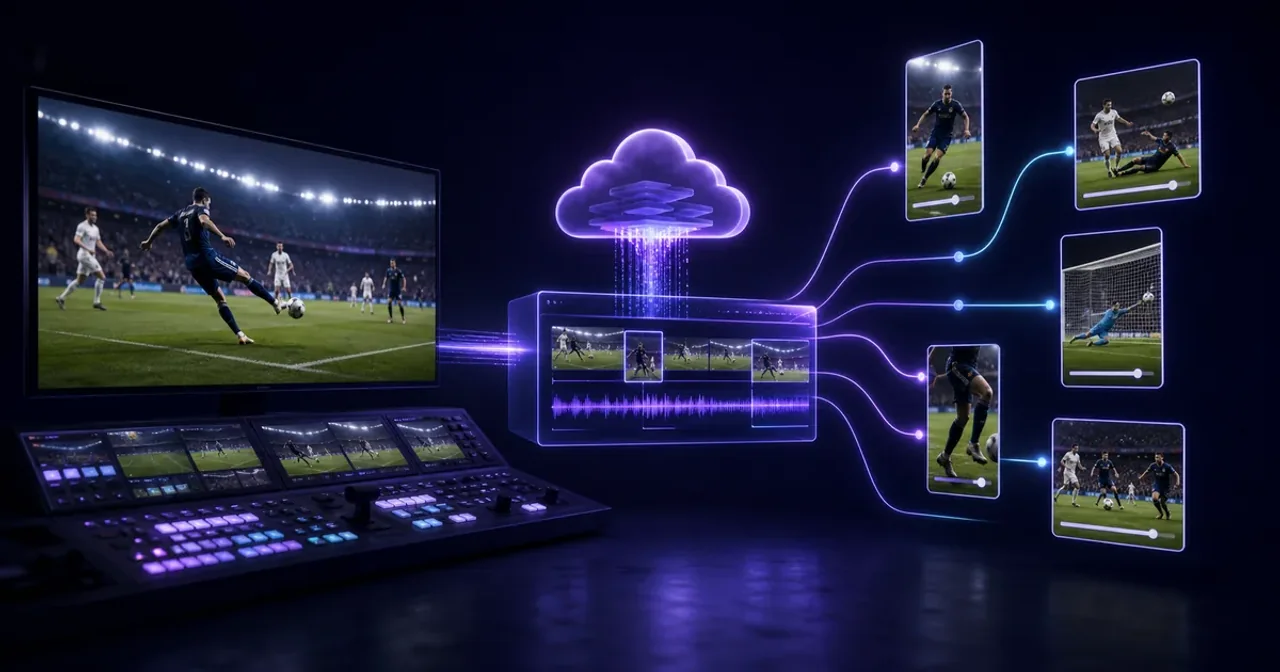
Live sports rights are valuable for more than the live window. A single match can supply highlights, vertical clips, analysis, sponsor moments, athlete stories and archive packages, provided the rights holder can create and publish them quickly enough. Repurposing live sports for social is therefore an operational discipline: the goal is to extract more audience value from rights already owned without weakening territorial deals or creating a second production department.
The audience is already there. Nielsen's 2025 Global Sports Report describes social media as an important force in creating new fan bases, including the growth of rugby interest around athlete-led content. Its September 2026 sports fan study also found that 77% of respondents watch sports programming beyond live events and 38% prefer highlights to full games (Nielsen Gracenote, Home Screen Advantage). Rights holders do not need another competition to serve that behaviour. They need a controlled way to reuse the competition they already produce.
Repurposing Live Sports Starts with a Rights Matrix
Before an editor cuts a frame, operations needs a simple rights matrix. Sports media rights are commonly divided by territory, platform, timing and format. WIPO notes that agreements may separately cover live transmission, mobile delivery, on-demand viewing and highlights, with geographical exclusivity often enforced through geoblocking (WIPO, Broadcasting and Media Rights in Sport).
The matrix should answer six questions for each competition: which accounts can publish, in which territories, on which platforms, after what delay, for how long, and with which sponsor or music restrictions. Add maximum clip length, takedown time, athlete likeness rules and whether a clean feed can be reframed. Store those rules as operational metadata rather than leaving them in a contract that nobody can consult during a live match.
Define reusable content classes before kick-off
A useful plan separates content into classes. Near-live highlights may have a short embargo and strict duration. Final-whistle recaps may permit longer edits. Press conferences, warm-ups, interviews and behind-the-scenes footage can carry different rights from match action. Archive clips may be cleared only after the live exclusivity window closes. Defining those classes in advance lets automation suggest eligible moments while the editor remains responsible for approval.
This distinction also protects the value of the live broadcast. The IOC has used abundant official digital content to engage younger audiences while continuing to protect the intellectual property of rights-holding broadcasters (WIPO overview of the Olympic Games and digital media). Social output works best as a route into authorised coverage, not as an accidental substitute for it.
Build One Live-to-Social Workflow, Not a Queue of Manual Edits
The operational chain should begin with the same live feed used for broadcast. Commentary, score data, production markers and speech-to-text can identify candidate moments. The system creates a clean master clip, then produces platform variants: 16:9 for longer highlights, 1:1 for feeds and 9:16 for vertical video. Captions, safe-area graphics, thumbnails and sponsor treatments are applied from templates.
A human editor then checks context, rights, spelling, score accuracy, sensitive incidents and framing. Approved versions are published with territory and expiry controls, while the master and its metadata are retained for later recaps. This is faster than exporting a new file for every destination, and it gives the organisation one auditable record of what was published.
Measure the clock from the sporting moment
Speed should be measured from the event, not from the time an editor opens a project. Track moment-to-detection, detection-to-first-cut, approval time and publish time. A 60-second target may suit a goal or race finish. A disputed decision may need several minutes and editorial context. The workflow should make both choices possible instead of rewarding speed regardless of risk.
Official platform evidence shows why timeliness and complementary formats matter. YouTube reported more than 14 billion minutes of Milano Cortina 2026 Olympics watch time, with official broadcasts and highlights complemented by creator coverage; views among signed-in 18-to-34-year-olds increased by more than 150% compared with Beijing 2022 (YouTube Milano Cortina 2026 viewership trends). The figures are YouTube's own platform data, so they should not be treated as a universal audience benchmark, but they demonstrate how official live coverage, highlights and creator perspectives can reinforce one another.
A Practical Example: One Tournament, Four Social Products
Imagine a rights holder operating a weekend basketball tournament. Its package includes domestic live rights, global social highlights up to 45 seconds after a two-minute delay, and archive use after midnight. The production team configures those rules before the first game.
- Near-live moments: approved scores, blocks and celebrations published vertically within two minutes.
- Sponsored recaps: a 60-second half-time and final-whistle package using a pre-approved sponsor frame.
- Analysis clips: commentary-led breakdowns produced after the live window, with enough context to explain the play.
- Archive stories: themed compilations assembled overnight once the broader archive rights become active.
All four products come from the same source and rights package. The additional value comes from faster selection, templated versions and clear approval rules, rather than purchasing another event. Commercial teams gain more sponsor inventory, social teams gain consistent output, and broadcast operations retains control of the master signal.
Protect Reach by Protecting the Rights
Fast publishing must include safeguards. Every asset should carry its source event, rights owner, territory, permitted platforms, embargo, expiry and approval record. Distribution accounts need role-based access. Music and third-party footage should be flagged. When rights expire, the operation needs a reliable unpublish or takedown process across every destination.
These controls also help distinguish authorised clips from piracy. The European Commission's guidance asks rights holders, platforms and authorities to cooperate on prompt action against unauthorised live retransmission while improving the availability and attractiveness of legal offers (European Commission recommendation on live-event piracy). A strong official clip operation gives fans timely, legitimate material and gives enforcement teams a clearer record of what was authorised.
Conclusion: Make Every Right Work Harder
Repurposing live sports for social extends the working life of rights already on the balance sheet. The practical advantage comes from preparing the rights matrix, detecting moments from the live feed, generating each format from one master, retaining human approval and attaching permissions to every asset.
Evrideo RapidClip helps broadcast and social teams turn live feeds into searchable, platform-ready clips while keeping editorial control in the workflow. Used alongside cloud playout and distribution, it allows the same sports operation to serve the live audience, social viewers, sponsors and the archive without building a separate technical chain for every destination.
Related Articles
From Broadcast to TikTok in Under 60 Seconds
August 26, 2026 · 8 min read

Building a Broadcast-Quality FAST Channel in Under a Day: A Technical Walkthrough
July 1, 2026 · 7 min read
How Broadcasters Launch Channels Without Adding Headcount
August 12, 2026 · 8 min read