
FAST in 2026: What Works, What Fails and What Comes Next
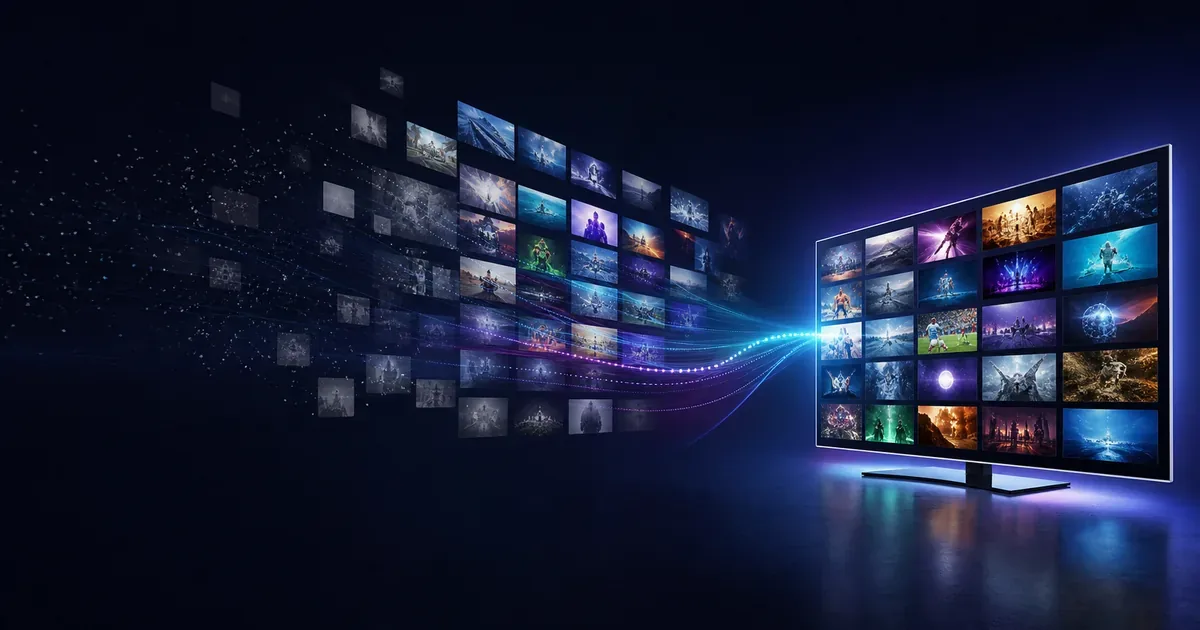
FAST in 2026 is no longer an experiment, but growth in channel supply does not guarantee audience or profit. Nielsen's Gracenote tracked nearly 1,850 active FAST channels in the third quarter of 2025, up 76% from 2023. At the same time, the market is becoming less forgiving of undifferentiated channels, weak metadata and advertising that interrupts rather than supports the viewing experience (Nielsen Gracenote Data Hub).
The next phase of free ad-supported streaming television will therefore be measured less by how many channels launch and more by whether each service earns repeat viewing, distributes efficiently and converts attention into sustainable revenue. Here is what is working, what is not, and where FAST appears to be heading.
FAST in 2026: Growth Is Real, but Supply Is Not the Same as Demand
Audience behaviour supports the opportunity. Nielsen reported that streaming reached 44.8% of US television use in May 2025, overtaking broadcast and cable combined for the first time. Three free streaming services, Tubi, The Roku Channel and Pluto TV, represented 5.7% of all TV viewing that month. By January 2026, Tubi and The Roku Channel alone accounted for 2.1% and 3.0% respectively (Nielsen's January 2026 Gauge).
Advertising is following viewers. IAB projected US digital video advertising at $72 billion in 2025, almost 60% of total TV and video ad spend. Deloitte's 2026 consumer research also found that 68% of streaming subscribers now pay for at least one ad-supported service, more than 20 percentage points higher than in 2024 (IAB Digital Video Ad Spend report; Deloitte Digital Media Trends).
Those numbers validate free, advertising-funded television as a viewing model. They do not validate every channel. As catalogues expand, the competition shifts from gaining platform capacity to winning a useful position in the guide and giving viewers a reason to return.
What Is Working in FAST
A clear promise beats a miscellaneous catalogue
The strongest FAST channels tell viewers what they will get in seconds: one sport, one franchise, one genre, one mood or one trusted editorial voice. That clarity improves both discovery and scheduling. A focused proposition helps a platform place the channel, helps an advertiser understand the audience and helps programming teams decide what belongs in the schedule.
Metadata is part of the product, not an administrative afterthought. Gracenote's 2025 FAST research counted more than 178,000 programmes, episodes and films across key markets and argued that programme-level metadata is essential to discovery and contextual advertising. A vague title or missing episode description can make strong content effectively invisible (Gracenote 2025 FAST report).
Freshness, live moments and fandom create repeat visits
FAST is no longer only a home for old library content. Gracenote found that more than 70% of available FAST programming was produced after 2010, while sports channels more than doubled in the year to March 2025. Live events, topical programming and regularly refreshed schedules give viewers a reason to build a habit rather than treat a channel as background filler.
The EBU supplied a useful current example in June 2026 when it expanded Eurovision Sport onto FAST services in the UK. The rollout combined free access, recognisable sports rights and distribution across multiple platforms. It shows how FAST can extend the reach of specialist content without forcing every viewer into a new paid subscription (EBU Eurovision Sport announcement).
Repeatable operations improve the economics
A channel may be free to the viewer, but it is not free to operate. Media preparation, scheduling, playout, captions, compliance, distribution, monitoring and ad signalling all create cost. The viable model standardises those functions across a portfolio instead of rebuilding the workflow for every service.
Cloud-native channel templates, shared media libraries and exception-based monitoring make it practical to test a niche proposition, add a regional feed or launch a temporary channel without committing to permanent hardware. This does not remove the need for quality control. It makes quality repeatable across more channels.
What Is Not Working
Launching a channel before proving distribution
A technically complete feed has no commercial value if viewers cannot find it. Content owners sometimes build the channel first and treat carriage, merchandising and audience acquisition as later tasks. A stronger plan starts with target platforms, territories, rights, delivery specifications and promotional commitments, then designs the channel around those realities.
Filling schedules without programming them
Continuous playback is not the same as programming. Long undifferentiated blocks, excessive repetition and weak dayparting quickly expose a channel assembled only to monetise dormant assets. Successful services use the catalogue deliberately: balancing familiar anchors with discovery, rotating episodes, responding to seasons and events, and refreshing presentation before fatigue becomes visible in the data.
Treating every ad opportunity as revenue
More ad breaks do not automatically produce more income. Unfilled inventory, repeated creative, abrupt transitions and excessive frequency can reduce viewing time and weaken the value of future impressions. Reliable SCTE-35 signalling, accurate duration data, sensible break structures and monitoring of fill rate, completion and churn are operational requirements, not optional optimisation.
Revenue should be measured after platform shares, sales fees, ad serving, content rights and channel operations. Gross impressions can look encouraging while the channel remains uneconomic.
Where FAST Goes Next
The market is likely to become simultaneously bigger and more selective. More rights holders, broadcasters and specialist publishers will launch channels, but platforms will have stronger reasons to remove services that duplicate existing supply or fail to retain audiences.
- Portfolio rationalisation: operators will merge overlapping channels and invest more heavily in the brands that demonstrate reach, retention and monetisation.
- More live and event-led services: sport, news and cultural events will complement scheduled libraries and create moments that can be promoted.
- Regional and language variants: reusable playout and distribution workflows will make localisation more economical, provided rights and advertising demand justify it.
- Better contextual advertising: richer metadata and dependable cue signalling will help match campaigns to content without relying entirely on personal identifiers.
- Unified broadcast and streaming operations: the same content, schedules and control layer will increasingly serve linear, OTT and FAST outputs rather than separate technical estates.
A Practical Test Before Launching a FAST Channel
Before funding a launch, ask five questions. Is the audience proposition immediately clear? Is carriage or distribution realistically attainable? Can the library sustain a schedule without obvious repetition? Are advertising rights and cue workflows ready? Can the channel be operated and monitored at a cost that still leaves a margin?
If one answer is weak, fix it before adding another feed to the market. A smaller, well-programmed channel with dependable delivery and a recognisable audience is more valuable than a larger channel that exists only because the content was available.
Conclusion: FAST in 2026 Rewards Discipline
FAST in 2026 has genuine audience momentum, growing advertising support and room for more specialist services. What it no longer offers is easy success through channel count alone. Clear positioning, active programming, platform distribution, reliable monetisation and repeatable operations now separate durable channels from temporary catalogue experiments.
Evrideo Broadcast helps media teams schedule, originate, monitor and distribute linear and FAST channels from one cloud-native platform, while Evrideo AdBoost supports the signalling and monetisation workflows that turn viewing into sustainable revenue.
Related Articles
The Cheapest OTT Content May Be a Linear TV Channel
August 28, 2026 · 7 min read
From Broadcaster to Streaming Company: How Television Operations Are Changing
August 21, 2026 · 8 min read
How Broadcasters Increase Revenue Without Increasing Content Costs
August 14, 2026 · 7 min read