
Pop-Up Sports Channels: How to Monetise Live Events Without Permanent Infrastructure
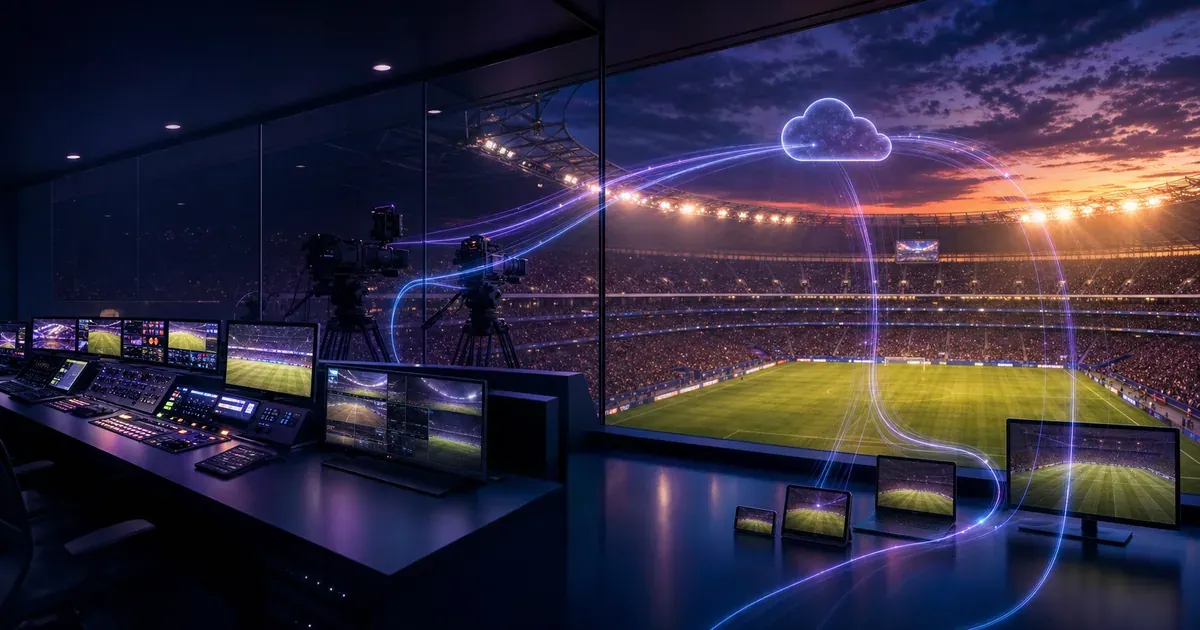
Pop-up sports channels solve a mismatch at the heart of live broadcasting: audience demand and commercial value can peak for a weekend, a tournament or a championship, while traditional channel infrastructure is designed to exist all year. A temporary channel lets a rights holder build a complete viewing destination around the event, then retire it when the opportunity ends.
The timing is favourable. IAB expects U.S. digital video advertising to exceed $80 billion in 2026 and represent more than 60% of total TV and video ad spend. It also identifies the migration of sports rights to streaming as a driver of CTV growth (IAB 2026 Digital Video Ad Spend report). For broadcasters and rights holders, the opportunity is not simply to stream the match. It is to create more sponsorable viewing hours around a moment when fans are already paying attention.
Why Pop-Up Sports Channels Work
A single live stream has a hard start and stop. A pop-up channel can begin days earlier with previews, archive matches, profiles and highlights; carry the live competition; then continue with analysis, replays and a final recap. That turns one rights package into a programmed service and gives sponsors more inventory than the event window alone can provide.
Sports is unusually good at concentrating audiences. Nielsen found that sport accounted for 26.4% of U.S. broadcast viewing in Q3 2024, helped by the Olympics and the start of the NFL season. Its analysis also found that sport attracted 52% of broadcast TV media spend between October 2023 and September 2024, against 22% of viewing time (Nielsen 2025 Upfronts/NewFronts guide). A temporary channel makes that concentrated interest easier to package, brand and measure.
It creates inventory before and after the whistle
The commercial plan should start with the schedule, not the encoder. Pre-event programming can include qualifying sessions, previous finals, athlete stories and sponsor-funded explainers. The live window carries premium spots and dynamic ad insertion. Post-event programming extends the audience with replays and highlights while the result is still relevant.
This also creates cleaner propositions for different buyers. A presenting sponsor can own the channel identity; local advertisers can buy addressable breaks; and distribution partners can receive a version matched to their protocol, bitrate, audio, caption and ad-signalling requirements.
Build the Channel Around the Rights Window
The fastest route is a reusable channel blueprint. Define the graphics package, schedule structure, live inputs, fallback slate, compliance recording, SCTE-35 policy, output profiles, monitoring thresholds and shutdown procedure once. The next tournament should be a configuration exercise, not another integration project.
Before the event: programme and prove
Start with rights: territories, platforms, archive permissions, clip windows, blackout rules and sponsor categories. Then build a schedule that mixes prepared content with clearly marked live segments. Validate every asset, caption file and audio layout before it enters the active playlist. Rehearse transitions from scheduled programming to the venue feed and back again, including the loss-of-signal path.
Use test outputs for each distribution partner rather than assuming one clean master will behave identically everywhere. HLS and DASH manifests, broadcast contribution feeds and FAST platform inputs may expose different timing or marker problems. Monitoring should cover pictures and sound, manifest freshness, ad markers, endpoint delivery and schedule drift.
During the event: operate by exception
Automation should execute the known plan; operators should manage exceptions. One view should show the active source, next event, redundancy state, ad-break status and downstream endpoint health. Alerts need priorities tied to viewer and revenue impact, so a failed premium output is not buried beneath minor warnings.
TV 2 Norway illustrates how far repeatable automation can scale. Its cloud video platform was designed to support more than 20,000 sporting events per year and up to 1,000 simultaneous broadcasts. AWS reports that resources are provisioned only when scheduled matches need them, with workflows automated from camera to viewer and requiring little or no staffing for lower-tier events (AWS and TV 2 Norway case study). A pop-up channel is smaller, but the operational lesson is the same: schedule-driven infrastructure is what makes temporary scale economical.
Monetisation Must Be Designed In
A channel is not monetised merely because it contains ad breaks. The workflow needs accurate SCTE-35 signals, a reliable SSAI or downstream insertion path, sensible break durations, fill monitoring and reconciliation between scheduled opportunities and delivered impressions. Sponsorship graphics and billboards also need editorial rules so they do not conflict with rights-holder or platform obligations.
Plan inventory in three layers:
- Channel sponsorship: naming, idents, bumpers and branded studio segments.
- Live break inventory: premium positions around natural stoppages, with accurate signalling and fallback content.
- Addressable distribution: platform or region-specific ad replacement where rights and technology allow it.
Measure the channel as a temporary business unit. Track launch cost, engineering hours, unique viewers, viewing time, ad opportunities, fill rate, delivery failures, sponsor commitments and revenue by destination. Cloud does not guarantee better economics; it makes the cost boundary visible and avoids buying permanent peak capacity for a short event.
A Practical Example: A Seven-Day Tournament Channel
Consider a rights holder with a three-day championship. The channel launches two days early with archive finals and competitor profiles. Day three adds weigh-ins or qualifying coverage. The live competition occupies days four to six, surrounded by a studio wrap and rapid-turnaround highlights. Day seven carries full replays and a closing programme before the service is archived.
The same master schedule can drive several outputs: a primary ad-supported stream, a clean feed for a syndication partner, and localized versions with different commentary or advertising. If a partner needs a different codec, bitrate or SCTE marker treatment, that transformation belongs in the output profile rather than in a separate channel build.
Large sports productions are already demonstrating the value of software-defined event infrastructure. Sony's 2026 hybrid cloud production handled more than 90 live sources while replacing physical pre-selector routing with cloud routing, reducing equipment and setup complexity without removing familiar operator controls (AWS and Sony sports production architecture). Pop-up channels apply the same principle commercially: allocate what the event needs, then release it.
Conclusion: Make the Event Bigger Than the Live Feed
Pop-up sports channels turn a temporary rights window into a complete, monetisable viewing proposition. The winning model combines pre-event programming, dependable live operations, accurate ad signalling, multi-platform distribution and a planned shutdown. Most importantly, the blueprint can be reused for the next tournament instead of rebuilt from scratch.
Evrideo Broadcast brings scheduling, cloud playout, live inputs, monitoring and distribution into one operational workflow, while AdBoost supports monetisation across streaming outputs. Together they help rights holders launch event channels quickly without carrying permanent infrastructure between fixtures.
Related Articles
Building a Channel Factory: How Media Companies Scale from 1 to 100 Channels
July 15, 2026 · 7 min read
The Clip Economy: Why Manual Broadcast Clipping Leaves Value Behind
August 5, 2026 · 8 min read
Repurposing Live Sports for Social Without Buying More Rights
September 2, 2026 · 8 min read