
Building a Channel Factory: How Media Companies Scale from 1 to 100 Channels
Launching one channel is a project. Launching one hundred is an operating model. That distinction matters as media portfolios expand across linear, OTT, regional feeds, pop-up services and FAST. Gracenote counted nearly 1,850 active FAST channels in Q3 2025, up 76% since 2023. A growing market does not merely create demand for more channels; it exposes every manual step that prevents an operator from repeating a successful launch (Nielsen Gracenote Data Hub).
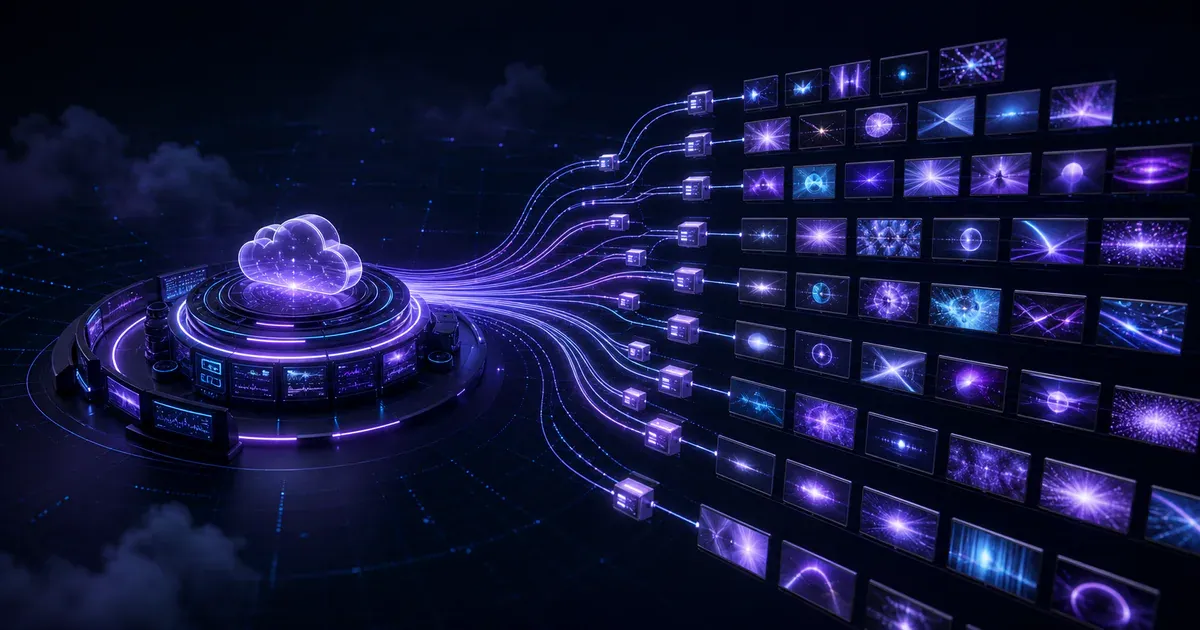
A channel factory is the answer to that operational problem. It is not a room full of duplicated playout servers. It is a repeatable system for turning approved content, schedules, branding rules, distribution profiles and monetisation policies into reliable channels with minimal one-off engineering.
Why a Channel Factory Is Different from “More Playout”
Traditional channel launches are often treated as bespoke integrations. A team creates a schedule, maps storage, configures graphics, builds an encoder profile, connects monitoring, validates captions, inserts ad markers and negotiates delivery requirements. The next channel repeats most of that work, but rarely in exactly the same way. By channel ten, the organisation owns ten slightly different operational products.
A channel factory reverses the pattern. The organisation defines a small number of approved blueprints, then instantiates them. A 24/7 archive channel, a live sports pop-up, a regional simulcast and a FAST thematic service may need different blueprints, but channels within each class should share configuration, observability and release controls.
Standardise the decisions, not the content
Standardisation does not mean every channel looks the same. It means recurring technical decisions are captured once. Frame rate, audio layout, caption handling, SCTE-35 policy, graphics safe areas, fallback behaviour, output protocol, bitrate ladder and monitoring thresholds become versioned templates. Brand identity and editorial scheduling remain channel-specific.
This is the operational equivalent of a “golden path”: teams can launch quickly by following a supported route, while exceptions remain possible and visible. The factory should make the normal case easy and the unusual case explicit.
The Five Layers of a Scalable Channel Factory
1. Content and metadata readiness
Scale starts before playout. Assets need consistent identifiers, rights windows, technical metadata, caption status, ad-break information and quality-control results. If every new service requires operators to repair filenames or chase missing duration data, automation simply moves the bottleneck upstream. A readiness gate should prevent incomplete assets from entering an active schedule and identify the exact issue for the content team.
2. Versioned channel templates
Each blueprint should describe the complete channel chain: storage locations, schedule rules, graphics packages, playout redundancy, live-input behaviour, encoding, packaging, distribution and compliance recording. Templates need version control so a codec update or new watermark policy can be tested on one channel, approved, and rolled out across a portfolio without manual reconfiguration.
3. Automated provisioning and scheduling
APIs and workflow orchestration turn a template into a running service. AWS demonstrates this principle with an EPG-driven Channel Assembly workflow that parses schedule data and automatically creates channel resources. The specific platform matters less than the design principle: a launch request should create a predictable chain rather than open a long sequence of engineering tickets (AWS Channel Assembly guidance).
4. Shared monitoring with exception-based operations
One operator cannot watch one hundred multiviewer tiles with equal attention. Monitoring has to combine technical telemetry and broadcast context: black or frozen video, silence, schedule drift, missing captions, stale manifests, ad-marker errors, endpoint health and redundancy state. The control room should rank exceptions by customer and revenue impact, then give operators enough context to act.
This is where automation changes staffing economics. The goal is not an unattended operation at any cost. It is to let skilled people investigate genuine risk rather than repeatedly confirming that healthy channels are still healthy.
5. Distribution and monetisation profiles
A channel is not complete when playout starts. Each destination may require different codecs, bitrates, protocols, manifests, blackout rules, ad signalling or programme metadata. Distribution profiles should be reusable objects attached to a channel, not bespoke instructions hidden in launch documents. The same applies to monetisation: ad-break policy, SSAI integration and reporting must be part of the blueprint if commercial teams are to compare performance across the portfolio.
Scaling from One Channel to One Hundred in Controlled Waves
Large-scale examples show what the operating model can achieve. BT migrated 213 linear channels to cloud-based OTT distribution in 12 months and reduced channel build times from days or weeks to hours. It also cut the time required to obtain cost insights by more than 99%, illustrating why financial observability belongs inside the factory rather than in a spreadsheet assembled after launch (AWS BT case study).
Catchplay offers a portfolio-growth example. Its FAST lineup expanded from 20 channels at launch to more than 90, while the service reported a 50% increase in monthly active users and a 70% rise in total viewing time within 90 days of launch. Those results do not prove that more channels always create more engagement, but they show why operators need infrastructure that can test and expand a lineup without rebuilding the workflow each time (AWS Catchplay case study).
Wave 1: prove the golden path
Start with one representative channel and document every dependency. Measure launch lead time, manual interventions, failed readiness checks and recovery behaviour. The objective is not merely to put pictures on air; it is to create the first reusable blueprint.
Wave 2: test portfolio variation
Add channels that stress different dimensions: another language, a live insert, a new distribution partner or a distinct ad model. Any repeated manual work should become a template parameter or automated validation. Any true exception should be documented with an owner and support model.
Wave 3: industrialise change
At larger scale, change management matters as much as launch automation. Teams need canary releases, rollback, template version reporting and portfolio-wide policy checks. A channel factory that can create one hundred services but cannot safely update them is only fast technical debt.
Measure the Factory, Not Just the Channels
Track time from approved request to test output, percentage of assets passing readiness first time, manual actions per launch, incidents per channel-hour, mean time to recovery, unfilled ad opportunities and cost per active channel. These metrics reveal whether scale is coming from genuine repeatability or from operators working harder behind the scenes.
Evrideo brings scheduling, cloud playout, live control, distribution, clipping and monetisation into one operational platform, which allows channel templates and shared monitoring to span more of the chain. The practical benefit is fewer handoffs between tools when a portfolio grows.
Conclusion: A Channel Factory Is an Operating Discipline
A channel factory turns channel growth from a succession of projects into a managed capability. Its value comes from reusable blueprints, clean metadata, automated provisioning, exception-based operations and controlled portfolio updates. That is how media companies move from one channel to one hundred without creating one hundred unique failure modes.
Learn more about how Evrideo Broadcast helps operations teams standardise cloud channel launches while retaining the flexibility needed for different brands, audiences and distribution partners.
Related Articles
Repurposing Live Sports for Social Without Buying More Rights
September 2, 2026 · 8 min read
From Broadcast to TikTok in Under 60 Seconds
August 26, 2026 · 8 min read
How Broadcasters Launch Channels Without Adding Headcount
August 12, 2026 · 8 min read