

SMPTE ST 2110 in the Cloud: What Broadcast Engineers Need to Know
SMPTE ST 2110 defines the transport of uncompressed video, audio, and ancillary data over IP networks. It's become the de facto standard for professional broadcast infrastructure — but its design assumptions (low-latency, lossless networks with precise timing) create interesting challenges when applied to cloud environments.
What SMPTE ST 2110 Defines
The ST 2110 suite covers several sub-standards: ST 2110-10 (system timing), ST 2110-20 (uncompressed video), ST 2110-30 (PCM audio), ST 2110-40 (ancillary data), and ST 2110-21 (traffic shaping). Each defines specific requirements for how media is packaged, timed, and transported.
The Cloud Challenge
ST 2110 was designed for on-premise IP networks where you control the physical infrastructure. Cloud networks introduce variable latency, packet loss, and timing uncertainty that are fundamentally incompatible with the strict requirements of uncompressed ST 2110 transport.
Practical Approaches for Cloud Deployments
There are three main approaches to using ST 2110 in cloud environments: dedicated cloud instances with SR-IOV networking (minimises latency but expensive), gateway-based approaches (convert ST 2110 at the edge, transport compressed media in the cloud), and hybrid architectures (ST 2110 on-premise, compressed transport to cloud). The right approach depends on your latency requirements and budget.
The Future: JPEG XS and Low-Latency Compression
JPEG XS compression is increasingly being used as a bridge between ST 2110's quality requirements and cloud networking's practical limitations. JPEG XS provides near-lossless compression at very low latency, making it practical to transport broadcast-quality video over standard cloud networks.
Related Articles

Introducing Evrideo StreamCheck: A Free SRT Diagnostic Tool for Broadcast Engineers
June 22, 2026 · 7 min read
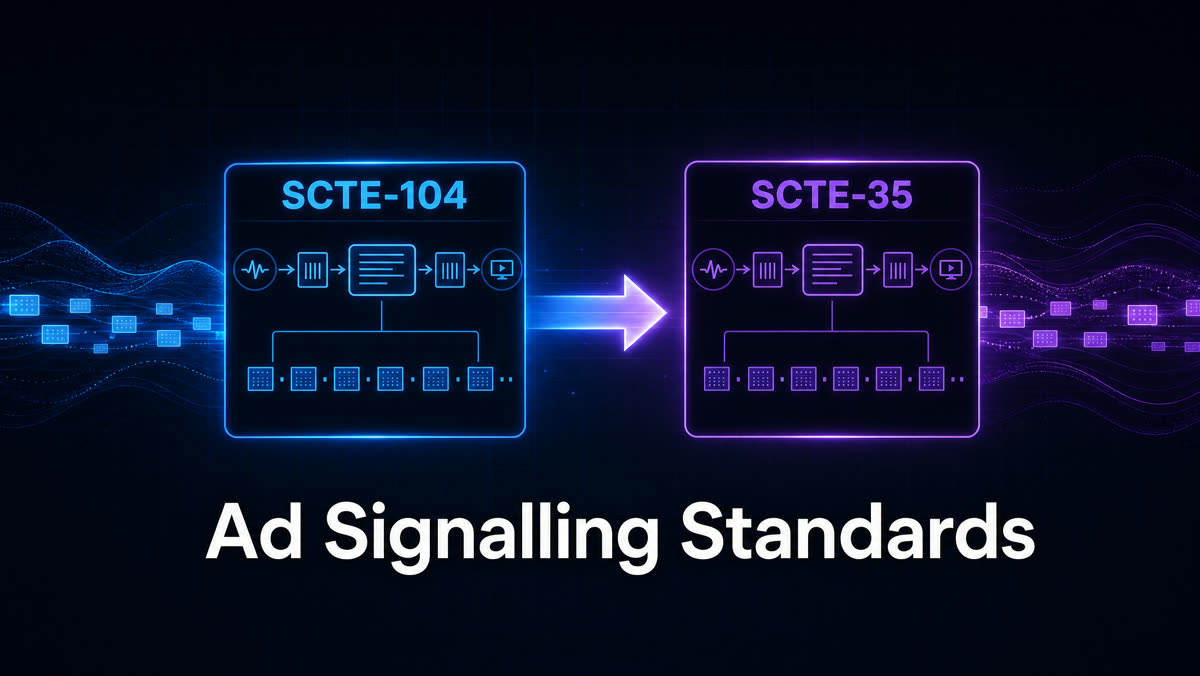
SCTE-35, SCTE-104 and SCTE-224: The Complete Guide to Broadcast Ad Signalling Standards
June 11, 2026 · 9 min read
Everything You Ever Wanted to Know About SCTE-35
May 21, 2026 · 22 min read