

DRM for Streaming: A Practical Guide for Broadcast Engineers
Digital Rights Management is one of those topics that broadcast engineers often encounter late in a project — usually when a content partner or platform requires it and the team has to scramble to implement it. This guide aims to give you a solid foundation before that moment arrives.
The DRM Landscape
There are three major DRM systems in widespread use for streaming: Widevine (Google, used on Android and Chrome), FairPlay (Apple, used on iOS, macOS, and Apple TV), and PlayReady (Microsoft, used on Windows and Xbox). Most premium content requires support for all three — this is called multi-DRM.
How DRM Works
At a high level, DRM works by encrypting your video content and requiring a licence from a licence server before a player can decrypt and play it. The licence contains the decryption keys and any usage rules (rental period, download limits, etc.). The player communicates with the licence server using a protocol specific to each DRM system.
CPIX and Key Management
The Content Protection Information Exchange (CPIX) standard defines how encryption keys are exchanged between your packaging system and your DRM licence servers. Using a CPIX-compliant key management system simplifies multi-DRM deployment significantly.
Common Implementation Mistakes
The most common DRM implementation mistakes we see: using the same key for all content (makes key rotation impossible), not implementing token-based licence authentication (allows licence sharing), and not testing on all target devices before launch (DRM behaviour varies significantly across platforms).
Related Articles

Introducing Evrideo StreamCheck: A Free SRT Diagnostic Tool for Broadcast Engineers
June 22, 2026 · 7 min read
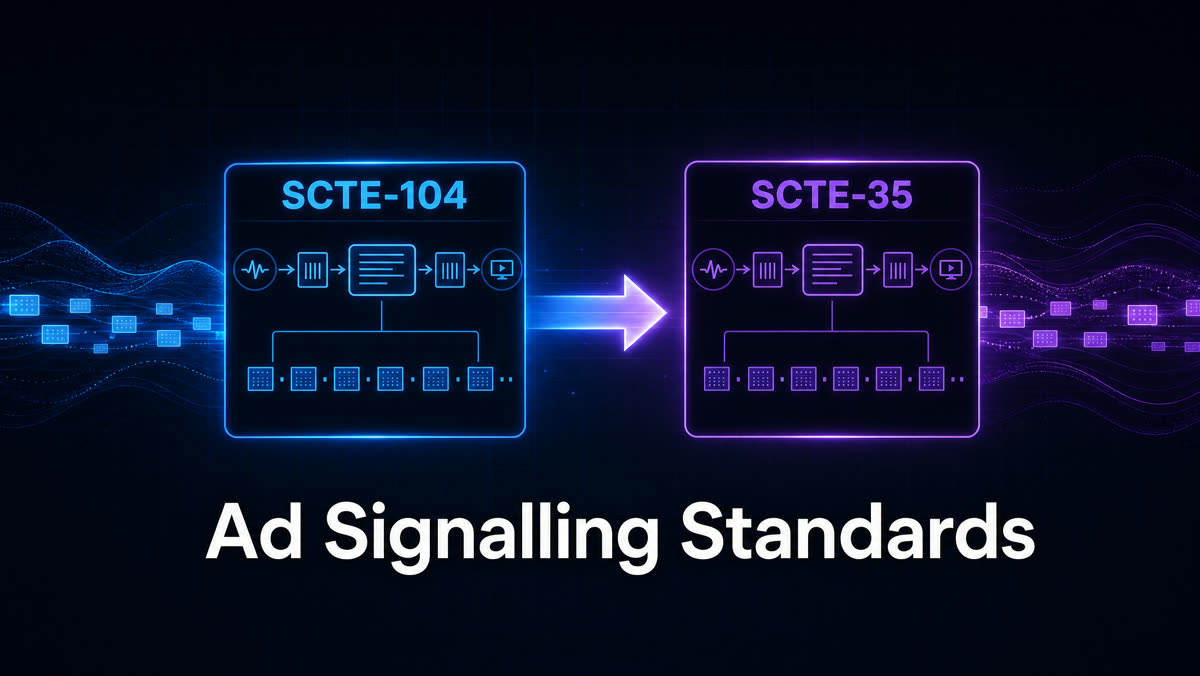
SCTE-35, SCTE-104 and SCTE-224: The Complete Guide to Broadcast Ad Signalling Standards
June 11, 2026 · 9 min read
Everything You Ever Wanted to Know About SCTE-35
May 21, 2026 · 22 min read